You put the kettle on, check one message and sit down for a moment. The tea is now cold. Somehow, you have read an argument between people you do not know.
If that sounds familiar, try deciding what your break includes before you leave the work. You can still enjoy it. You are just making one small decision while the afternoon is still yours.
Choose a break with a visible ending
“Have a break” leaves quite a lot open. “Make tea and drink it by the window” gives the pause a shape. So does a walk around the block or listening to one song.
None is the correct way to rest. The useful distinction is whether you can tell when you have finished. A feed can keep supplying the next thing long after you have stopped enjoying it.
Finish a paragraph → make tea → drink it away from the desk → return and read the next paragraph.
Use a time cue when the activity has no endpoint
Sometimes you do want to browse or sit and do very little. Set a cue before you start, with enough time for the break you actually want. Five minutes is an example, not a rule you have failed if you need ten.
A phone timer may already do the job. If opening your phone is how the detour starts, keeping the timer beside your work gives you one less reason to pick it up.
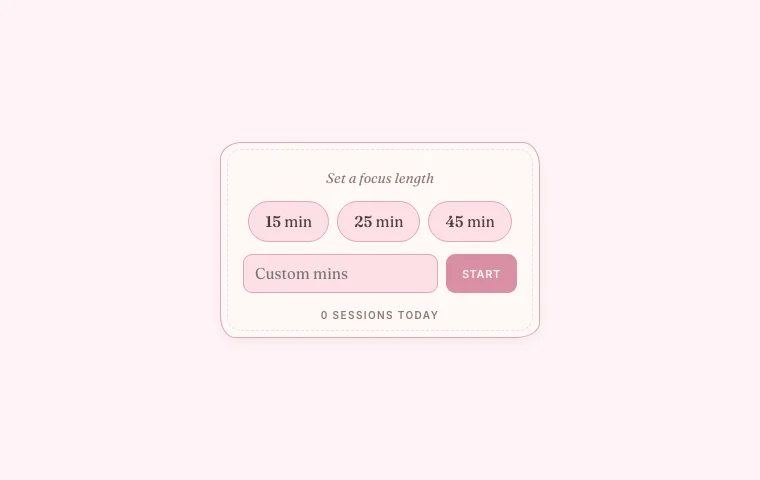
Dearly Peculiar’s Focus Timer lets you choose a work interval and then start a timed break. When the break ends, its “Back to focus” button offers the same work interval again. You still choose to continue. It does not close other apps or bring you back to the desk.
Make returning a small decision
Before you step away, leave the document open at a useful place. You might highlight the paragraph you want to read next or leave a line saying “check the second figure”. Returning then starts with something concrete, rather than a fresh negotiation with the whole project.
For longer gaps, a short return note can hold more context. For a cup of tea, a few words may be plenty.
If the cue arrives and you still need a break, choose to extend it. The point is to notice that choice, rather than discovering much later that the pause quietly became the plan.


