
A scene can be over and still leave you with something to work through. Why did that character hesitate? Does a later chapter change how you read the conversation?
This is a part of fandom I love: writing analysis, saving other people's analysis, and thinking further into a story. Someone notices a detail, you follow it back, and suddenly there is more to consider.
Writing gives a thought somewhere to go
Once you try to explain why a scene matters, you have to slow down around the details. Is a character distant because of what they say, a question they avoid, or how they behaved earlier?
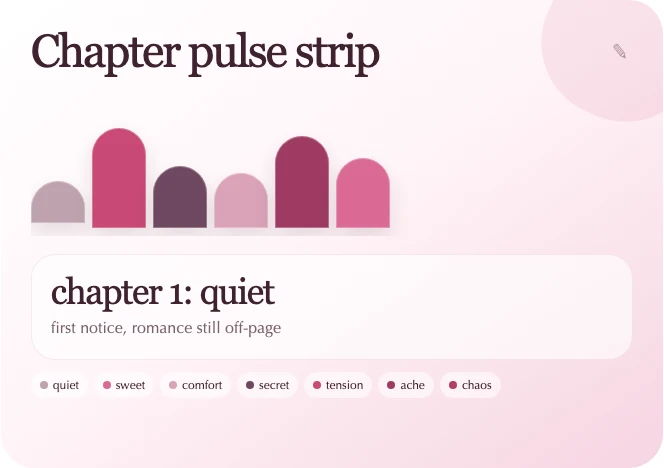
A run of tense chapters with one quiet moment between them gives you something to revisit. Why does the story soften there? The mood is your interpretation; the longer explanation can stay in your notes.
Other people's analysis gives you another way in
I like saving other people's analysis too. Another reader might connect distant chapters or notice something about a relationship that changes the question you were asking.
The paragraph about the apology
Keep: the writer's name and original link.
My question: does the earlier scene support this reading?
You do not have to agree with the whole reading to keep it. Leave a few words about why it caught your attention, and keep the writer's interpretation distinct from your response.
Going back can change the question
An early scene reads differently once you know what follows. You might notice a pattern, or become less certain about something that seemed obvious.
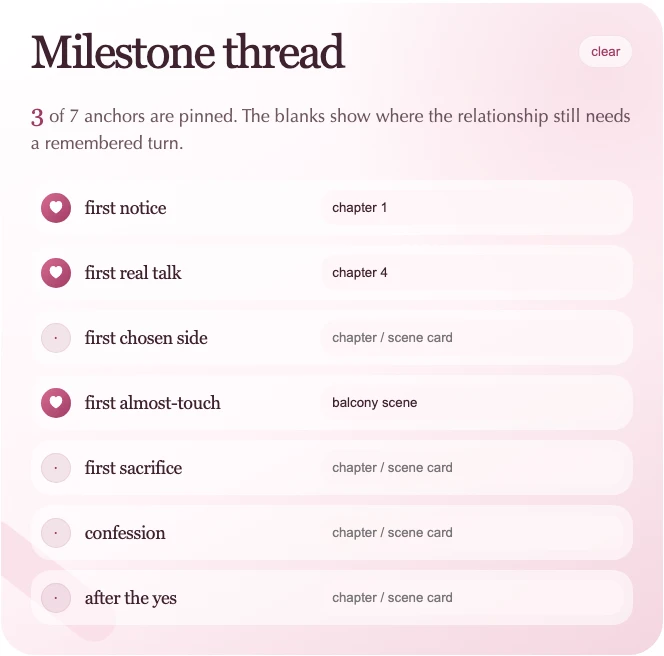
Deciding where a turning point belongs can itself become part of the analysis. Leave a prompt blank if it does not fit. Keep earlier thoughts too, even when you want to add “I read this differently now”.
A place to return to the thinking
A Notion page can hold your writing and saved links, with a few reference points kept in view beside them.
The analysis is still the reason to come back. There is another interpretation to consider, a passage to compare, or a thought you have not quite found the words for yet.
That is what I enjoy about spending this much time with a story. There is more to think about, and I want somewhere to keep following it.